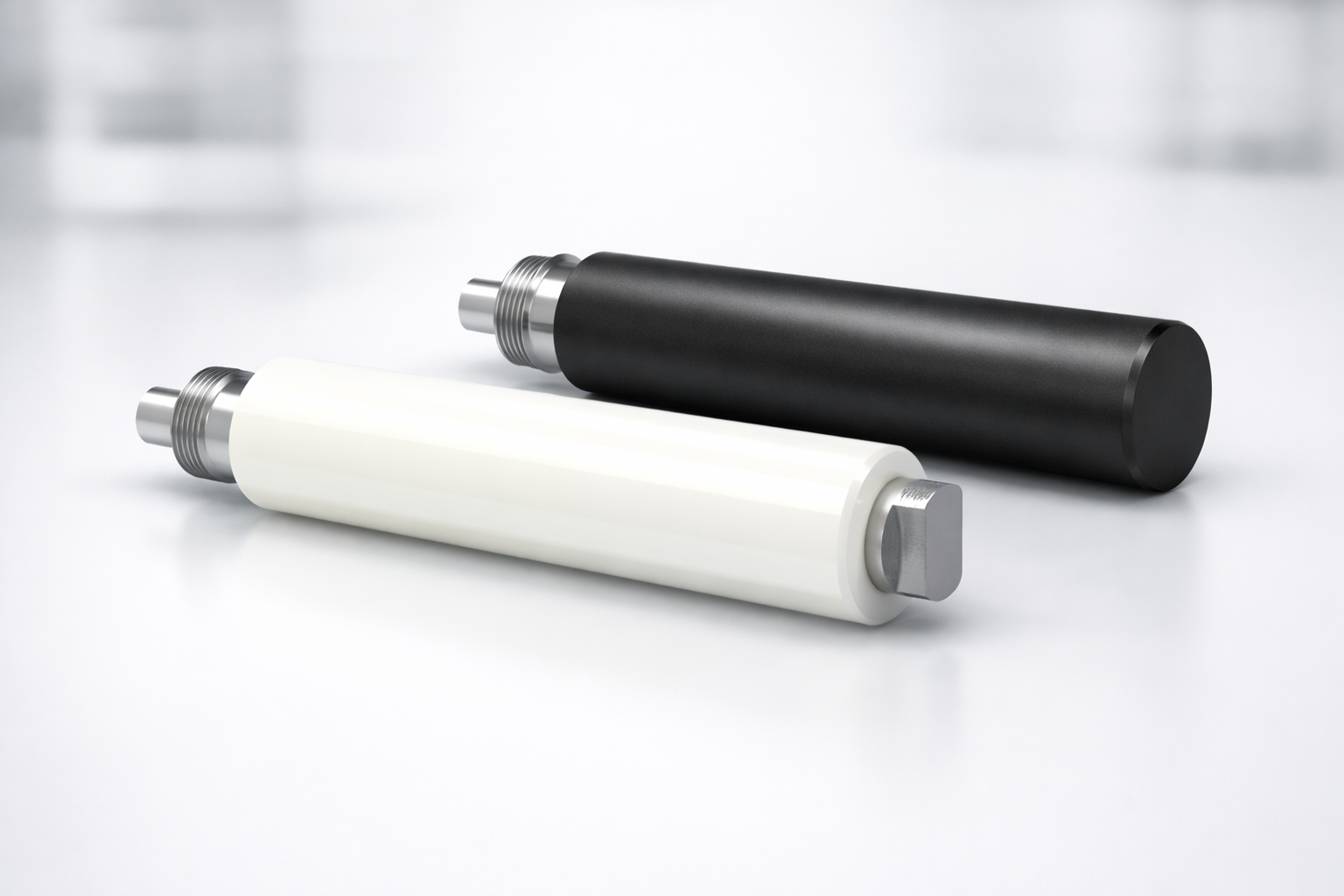


In many industrial environments, the real problem is not in the process, but in the material used.
Components that wear out too quickly, deform at high temperatures or fail due to corrosion are common situations when traditional materials such as steel or certain technical plastics are used under demanding conditions.
This is where alumina tubes begin to stand out.
They are not simply a ceramic alternative, but an engineered solution designed to perform where other materials fail. In this article we look at when it makes sense to use them, what real advantages they offer and how to choose the right option for each application.
Limitations of traditional materials in demanding industrial environments
Before proposing a solution, it is essential to understand the source of the problem.
In abrasive environments, such as wire drawing or processes with constant friction or the presence of particles, steel suffers progressive wear. This means frequent replacements, increased maintenance and unplanned downtime. What initially appears to be an economical solution ends up becoming a recurring operating cost.
Temperature is another critical factor. Many metals and alloys lose mechanical properties when exposed to continuous heat. This results in deformation, loss of precision and reduced service life, especially in thermal processes where stability is key.
In chemically aggressive environments, corrosion is inevitable. In addition to material deterioration, this can lead to process contamination, which is especially critical in chemical industries, laboratories or high-purity applications.
What are alumina tubes and why are they an industry standard?
Alumina ceramic tubes are manufactured from aluminum oxide (Al₂O₃), one of the most widely used materials in technical ceramics.
Its value lies in its balance of properties. Alumina combines mechanical strength, thermal stability, chemical resistance and cost competitiveness with other technical ceramics. It may not be the most extreme material in every category, but it is one of the most versatile and efficient overall.
With a hardness close to 9 on the Mohs scale, it offers excellent performance in wear environments. It can operate continuously at temperatures of 1600-1700 °C, has excellent electrical insulation and maintains its dimensional stability due to its low thermal expansion.
This combination makes it a reliable and widely used solution in multiple industrial sectors.
Real advantages of alumina tubes in industrial applications
Technical properties are only valuable if they translate into operational benefits, and alumina clearly does this.
In wear environments, their high hardness significantly reduces material loss. This translates into longer service life, less frequent maintenance and fewer production interruptions. In applications such as wire drawing or systems with abrasive particles, the difference compared to steel is remarkable.
In high temperature processes, alumina maintains its structural integrity where metals begin to fail. Its dimensional stability allows constant operation, making it particularly suitable for furnace components, thermocouple protection tubes or continuous thermal processes.
Chemically, alumina is highly inert. It resists acids, bases and solvents without degrading or contaminating the process, making it ideal in chemical or laboratory environments.
In addition, its dielectric properties make it an excellent electrical insulator, providing added value in equipment where electrical protection is required, especially in high temperature conditions.
Finally, its stability allows for more accurate and repeatable processes. In industrial environments where consistency is key, this translates directly into higher product quality and better process control.
Industrial applications where alumina tubes make a difference
The value of alumina is best understood through its applications.
In copper drawing, alumina tubes are used as guides or protection elements in contact with the wire. Their low friction and high wear resistance improve surface finish and extend component life.
In industrial furnaces, they are used as process tubes, thermocouple protection or structural supports. Their ability to withstand high temperatures while maintaining stability makes them indispensable.
In wear applications, such as bushings or guide elements in contact with abrasive materials, they significantly reduce erosion and maintenance requirements.
In the chemical industry and laboratory, they allow working with aggressive fluids and high purity samples without risk of contamination.
In advanced sectors such as nuclear or semiconductor, high purity versions are used where stability, chemical resistance and material integrity are critical.
Alumina grades (95%, 99%, 99.7%) and how to choose the appropriate one
Not all alumina is the same, and selecting the correct grade is critical.
Alumina 95% is the most economical option. It offers good overall performance and is suitable for standard industrial applications where extreme conditions do not exist.
99% alumina provides higher thermal and chemical resistance due to its higher purity. It is commonly used in furnaces, chemical environments and laboratory applications.
Alumina 99.7% is a high purity solution for critical applications. It offers maximum thermal stability, chemical resistance and dielectric properties, making it suitable for industries such as semiconductor and nuclear.
The choice should be based on operating temperature, chemical exposure, mechanical loads and budget. The higher the purity, the higher the performance… but also the higher the cost. The goal is to find the right balance.
Price comparison: alumina vs. other technical ceramics
Cost is often a decisive factor, but it must be analyzed in context.
Compared to advanced ceramics such as zirconia or silicon carbide, alumina offers a more competitive cost while maintaining good performance in most applications. It may not match the extreme performance of other materials in specific cases, but it provides an excellent cost-benefit ratio.
The most common mistake is to focus only on the initial price. In industrial environments, total cost of ownership is much more relevant.
Alumina components typically last longer, require fewer replacements and reduce downtime. When these factors are considered, the life-cycle cost is usually significantly lower.
That said, alumina is not always the best choice. In applications with severe thermal shock or where high toughness is required, materials such as zirconia may be more suitable. This reinforces a key point: material selection should be based on technical, not just economic, criteria.
Design matters: it’s not a pipe, it’s an engineered solution
One of the most common mistakes is to treat ceramic components as standard parts.
In reality, performance is highly dependent on design.
Tailor-made manufacturing allows to adapt inner and outer diameters, length and tolerances to each application. This ensures optimal process integration and maximizes performance.
Surface finish is another critical factor. Polished tubes reduce friction and improve performance in dynamic applications, such as drawing or fluid handling. In static applications, a less demanding finish may be sufficient and more economical.
The key is not only to choose alumina, but to optimize the combination of material, geometry and finish according to the actual working conditions.
This is where the difference between supplying a product and providing an engineered solution is made.
Conclusion: When does it make sense to switch to alumina?
Alumina tubes are not the right solution in all cases.
However, when the problem is related to wear, high temperatures, chemical exposure or the need for stability, they are often one of the most reliable and cost-effective options.
Changing material is not a cost, but an investment in durability, efficiency and process reliability.
When steel starts to fail, alumina starts to make sense.