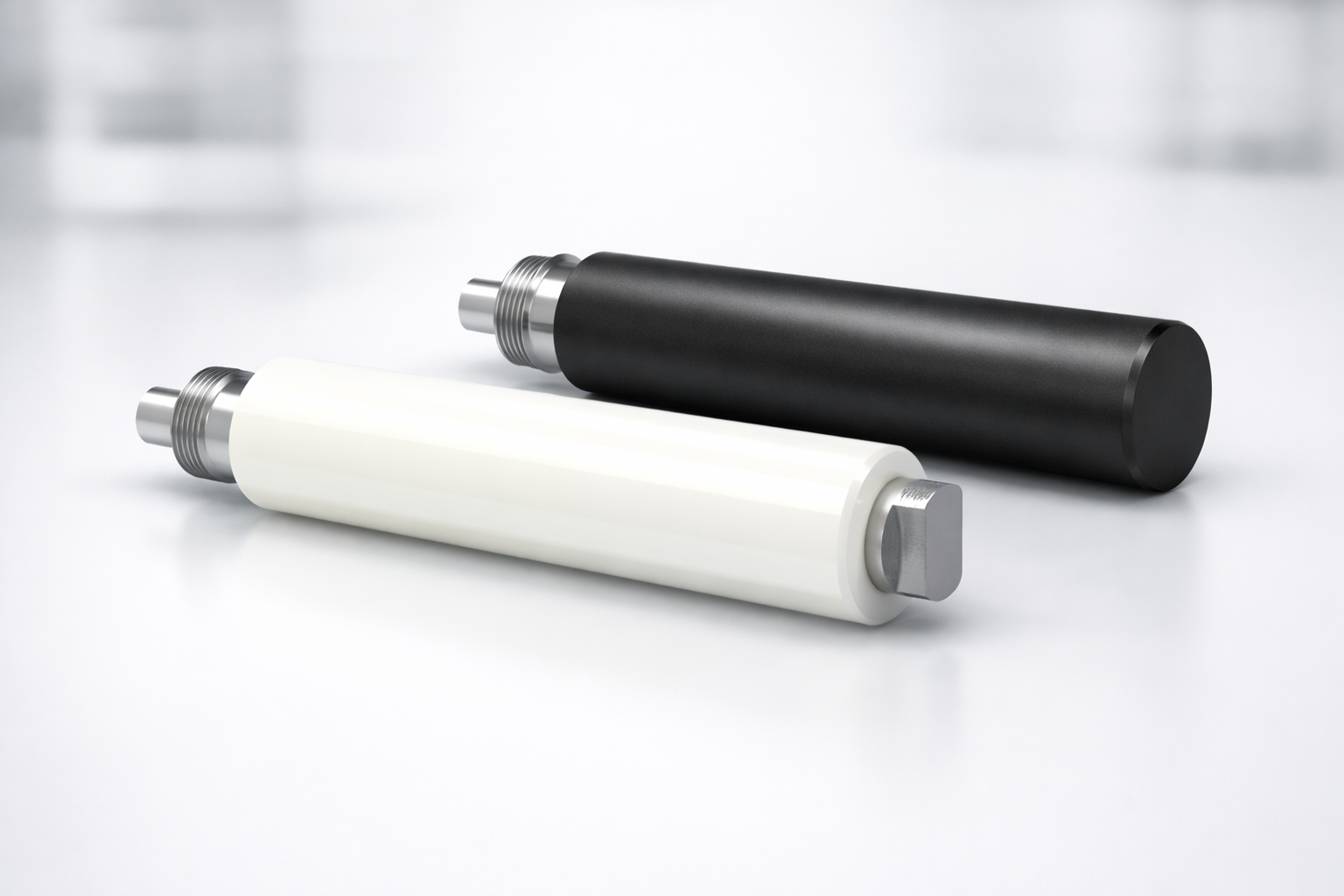


In many industrial processes, valves are no longer a standard component but a critical point of failure. Especially when abrasive particles, aggressive chemicals, high pressures or high temperatures are involved, traditional metal solutions start to show their limitations.
It is in this context that ceramic valves have evolved from a niche solution to a strategic alternative to improve reliability, reduce maintenance and optimize equipment performance.
However, they are not always the best choice. And, more importantly, not all ceramic solutions behave the same.
What is a ceramic valve and why is it gaining relevance in the industry?
A ceramic valve is a flow control device in which key components – such as seats, balls, pistons or contact surfaces – are made of advanced technical ceramics instead of metal.
The difference is not only in the material, but also in its behavior. While metals tend to degrade progressively in aggressive environments, ceramics maintain their properties for much longer, especially in the face of wear, corrosion and temperature.
This has a direct impact on operation: increased stability, reduced leakage and significantly longer service life in demanding processes.
The growing adoption of ceramic valves is not a trend, but a response to a real need. Industrial environments are becoming increasingly demanding, and conventional materials cannot always keep up.
When are metal valves no longer viable?
Most metal valves work properly… until they stop working. And usually the failure is not sudden, but progressive, gradually affecting system performance.
Abrasive wear is one of the main causes. When the fluid contains solid particles, they continually impact the internal surfaces, generating micro-erosions that end up compromising sealing and flow control. In these cases, not even hardened steels or surface coatings are sufficient.
Chemical corrosion is another recurring problem. Certain fluids, especially in the chemical industry or in processes with extreme pH, continuously attack metal surfaces. This not only reduces the service life of the valve, but can also contaminate the process.
Added to this are phenomena such as cavitation, erosion due to high flow velocities or high pressure conditions, which accelerate the deterioration of metallic components.
The result is familiar: more maintenance, unplanned downtime and frequent replacements. This is where the real cost – the total cost of ownership – moves away from the initial price.

Types of ceramic valves and how to choose the right one
There is no single solution for ceramic valves. Geometry, type of movement and internal configuration determine how each valve behaves in a particular application.
Ceramic ball valves are one of the most widely used options. Their operation is simple and robust, offering excellent sealing even in the presence of particles. They are particularly suitable for applications requiring reliable sealing with low maintenance.
Piston valves excel in high-pressure systems and processes with intensive repetitive cycles. Here, ceramics provide a key advantage: the ability to maintain tight tolerances and resist wear without deformation, which is critical in applications such as high-pressure pumps or industrial cleaning systems.
Ceramic gate valves are designed to handle fluids with high solids content. Their abrasion resistance makes them a common choice in mining and material handling.
Hybrid solutions, on the other hand, allow ceramic components to be integrated into existing valve designs. This approach is especially useful when seeking to improve durability without completely redesigning the system.
In any case, the choice should not be based solely on the type of valve, but on the actual process conditions: pressure, temperature, type of fluid, presence of particles and duty cycles.
Ceramic materials: the key to performance
To talk about ceramic valves without talking about materials is to stay on the surface. Not all ceramics behave the same, and choosing the wrong one can compromise the entire solution.
Zirconia (ZrO₂) stands out for its toughness and impact resistance. It is particularly suitable for moving or dynamically loaded components such as balls or pistons.
Alumina (Al₂O₃) offers an excellent balance between hardness and chemical resistance, making it a common choice for seats or components subject to continuous wear.
Silicon carbide (SiC) is used in highly aggressive environments where high temperatures and chemical exposure are combined. Its erosion resistance and thermal stability make it ideal for extreme applications.
Silicon nitride (Si₃N₄), on the other hand, excels in processes with rapid temperature changes, thanks to its resistance to thermal shock.
One of the most common mistakes is to select materials without a thorough understanding of the process. Ceramics is not a universal solution, it is an engineering solution.
Real advantages of ceramic valves
The advantages of ceramic valves are not in the material itself, but in how that material translates into operational improvements.
Wear resistance can significantly extend service life in abrasive applications. Where a metal valve requires frequent replacement, a ceramic solution can maintain its performance over much longer cycles.
Corrosion resistance eliminates one of the main failure mechanisms in chemical processes and prevents fluid contamination.
Thermal stability makes it possible to work in conditions where metals lose properties or become deformed.
All this translates into lower total cost of ownership: less maintenance, less downtime, higher availability and greater operational predictability.
In addition, the dimensional stability of the ceramic components ensures a more consistent performance over time, directly impacting the quality of the process.
Limitations and common errors
Despite their advantages, ceramic valves also have limitations. The initial cost is often higher than that of metallic solutions, which can lead to resistance at the purchasing stage.
There is also some sensitivity to impact if the design is not properly thought out. Ceramics are very strong, but they do not tolerate design or installation errors well.
Another common mistake is to try to directly replace a metal valve with a ceramic valve without adapting the system. In many cases, this leads to substandard results.
This is where engineering-based design and hybrid solutions make the difference.
Industrial applications where they make a difference
Ceramic valves provide greater value in environments where wear, corrosion or demanding conditions are critical.
In the chemical industry, they allow handling highly corrosive fluids without material degradation or process contamination.
In mining, where slurry transport generates extreme abrasion, its durability is a significant advantage.
In oil & gas, the combination of pressure, particles and corrosion makes ceramics a highly reliable solution at critical points.
In high-pressure systems, such as pumps or waterjet equipment, ceramic components withstand intensive cycling with minimal wear.
They are also used in sectors such as paper, energy, water treatment and even food and фарma, where stability and purity are essential.
How to approach a ceramic valve project correctly
Implementing ceramic valves is not about substituting one material for another. It requires understanding the process, identifying the critical points and designing the solution accordingly.
Material selection should be based on actual working conditions, not assumptions. Integration with the existing system is key to ensure performance.
Above all, you have to change the perspective: it’s not about how much the valve costs, but how much each operating cycle costs.
Here, expertise in high-performance ceramic components – such as pistons, anti-wear systems or high-pressure solutions – is key to developing truly optimized solutions for each application.