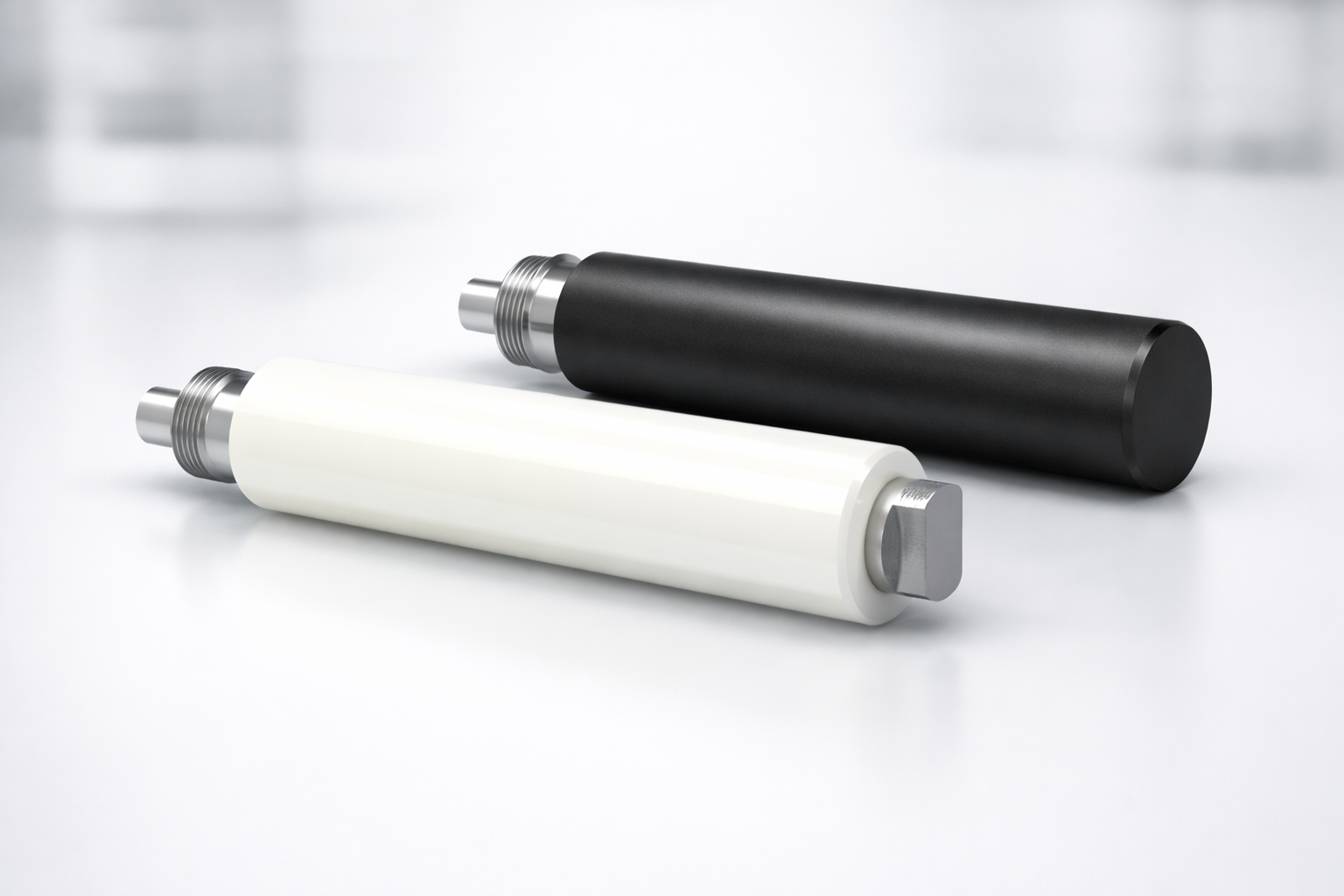


Resistance welding of nuts is a well-established process in sectors such as automotive, household appliance manufacturing and metal processing. Despite its maturity, it continues to present recurring challenges that directly affect production efficiency, weld quality and operating costs.
At the root of many of these problems is the tooling. Usually made of metallic materials, these components work under highly demanding conditions: rapid thermal cycling, mechanical loads, molten metal spatter and progressive wear. Over time, these factors not only deteriorate the tooling, but also compromise the stability of the welding process.
In this context, advanced technical ceramics – and in particular silicon nitride (Si₃N₄) – have emerged as a solid alternative. Beyond extending component life, they enable improved process consistency and reduced inefficiencies that often go unnoticed.
The key question for manufacturers is no longer whether these problems exist, but whether a change in tooling material can tangibly improve performance, reliability and cost per part.
Common problems with conventional tooling for nut welding
In industrial environments, inefficiencies rarely have a single cause. They often accumulate progressively until they impact key indicators such as machine availability, scrap rate or maintenance frequency.
One of the most critical problems is thermal fatigue. During resistance welding, the tooling is subjected to rapid and repeated temperature variations. Each cycle generates localized heating followed by cooling, causing continuous expansion and contraction of the material. In metal tooling, this results in internal stresses that, over time, generate micro-cracks and structural degradation. The result is deformation, loss of dimensional accuracy and premature failure.
Another key factor is spatter adhesion. Molten metal particles tend to adhere easily to metal surfaces. As these deposits accumulate, they change the geometry of the tooling and interfere with proper nut positioning. What initially seems like a minor problem can quickly lead to reduced repeatability, inconsistent weld quality and an increase in defective parts.
Wear and tear further aggravates the situation. The combination of friction, high temperatures and environmental contamination progressively deteriorates surfaces. As tolerances are lost and geometry becomes irregular, maintenance requirements and unplanned downtime increase. In many cases, these effects are assumed to be unavoidable, when in fact they are directly related to material limitations.
Silicon nitride as a high-performance alternative to silicon nitride
Silicon nitride is not simply a harder or more heat-resistant material. It is a technical ceramic specifically designed to perform under extreme mechanical and thermal conditions. Its value in resistance welding applications lies in its ability to simultaneously address multiple failure mechanisms.
One of its main characteristics is its resistance to thermal shock. Unlike metals, which exhibit high thermal expansion, silicon nitride has low expansion and a microstructure capable of withstanding rapid thermal gradients without cracking. This makes it a particularly suitable solution for repetitive welding cycles, where thermal fatigue is a critical factor.
Equally relevant is its behavior towards molten metal. Silicon nitride has a low chemical affinity, which significantly reduces spatter adhesion. As a result, tooling surfaces remain cleaner for longer, promoting stable positioning and reducing the need for cleaning interventions.
From the mechanical point of view, this material also breaks with the traditional idea that ceramics are fragile. It offers relatively high toughness compared to other ceramics, allowing it to withstand moderate impacts and mechanical stresses common in automated welding systems. This combination of hardness and toughness ensures structural integrity even in dynamic environments.
In addition, it is highly wear resistant. Its hardness and stability enable it to maintain geometry and surface quality over long periods, even under conditions of continuous friction and high temperatures. This translates directly into longer service intervals and less frequent replacement.
Thermal management and process stability
Beyond durability, silicon nitride directly influences the thermal behavior of the welding process.
Its thermal conductivity, although lower than that of metals, is sufficiently balanced to allow controlled heat dissipation. This prevents excessive temperature build-up and reduces the occurrence of localized hot spots.
Better thermal management translates into greater process stability. When heat distribution is more uniform, weld quality becomes more predictable, variability is reduced and the likelihood of defects decreases. In high-volume production environments, this level of control is key to maintaining consistency and minimizing rework.
Impact on productivity and cost efficiency
Evaluating tooling materials solely by their initial cost can lead to inefficient decisions. The really relevant indicator is the total cost of ownership, which includes maintenance, downtime and quality losses.
By increasing tool life, reducing spatter problems and maintaining dimensional stability, silicon nitride helps to reduce downtime and stabilize production. This translates into increased equipment availability and overall improved efficiency.
In addition, the reduction in defects and rework directly impacts cost per part. Even small improvements in process consistency can generate significant savings in high volume production.
When to consider switching to silicon nitride tooling
Switching from metal tooling to technical ceramics is not always necessary, but there are clear signs that indicate when it may be a strategic improvement:
- Frequent tool wear
- Recurrent spatter adhesion problems
- Thermal fatigue failures
- High maintenance costs
- Instability in weld quality
Before implementing the change, it is essential to analyze aspects such as part design, operating conditions and integration with existing equipment. At this point, having a specialized supplier is key to ensure that the solution is correctly adapted to the application.
Conclusion: rethinking tooling materials in resistance welding.
Resistance welding of nuts is generally considered a stable and well-known process. However, many of its inefficiencies stem from material choices that have not kept pace with production requirements.
Silicon nitride takes a different approach. By simultaneously addressing thermal, mechanical and chemical challenges, it enables more stable, reliable and efficient welding operations.
In highly competitive industrial environments, where availability, quality and cost control are critical, continuing to use traditional materials can not only be a constraint, but also the source of persistent inefficiencies.