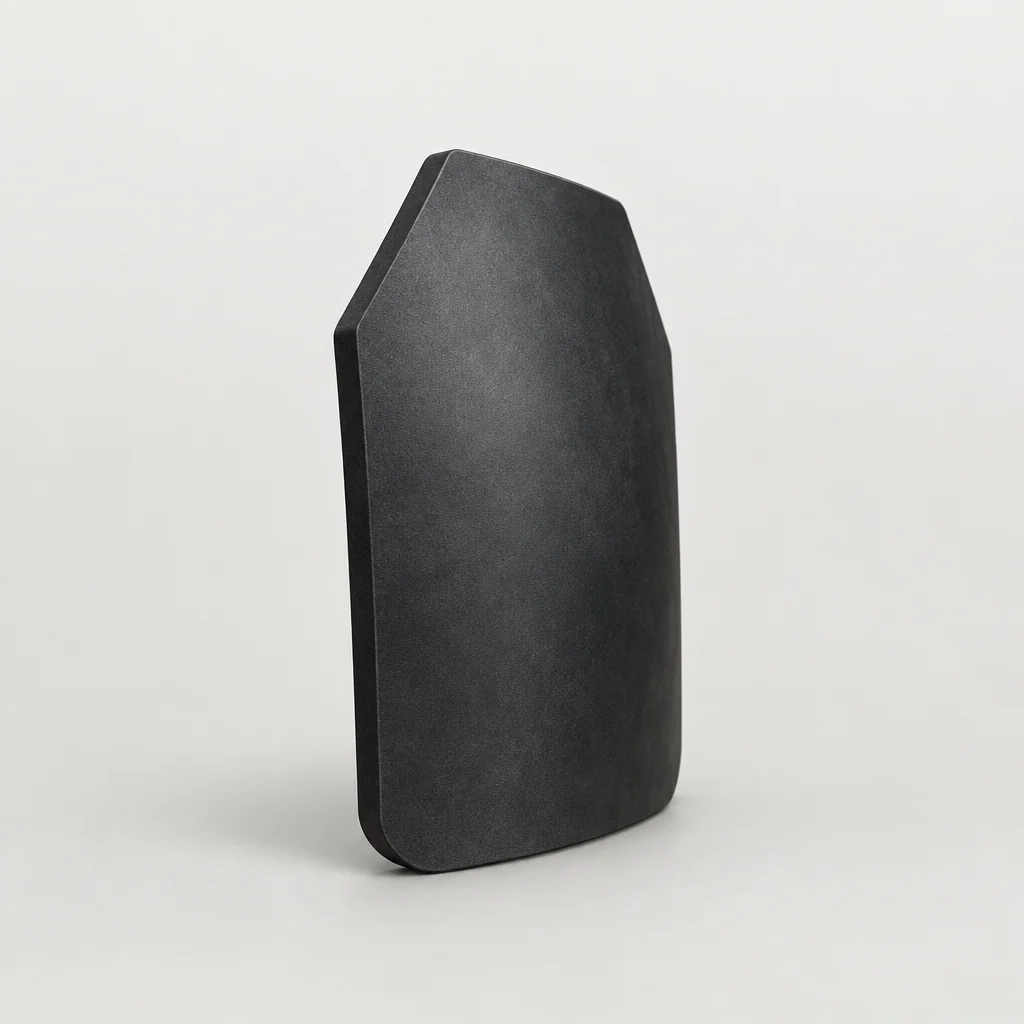
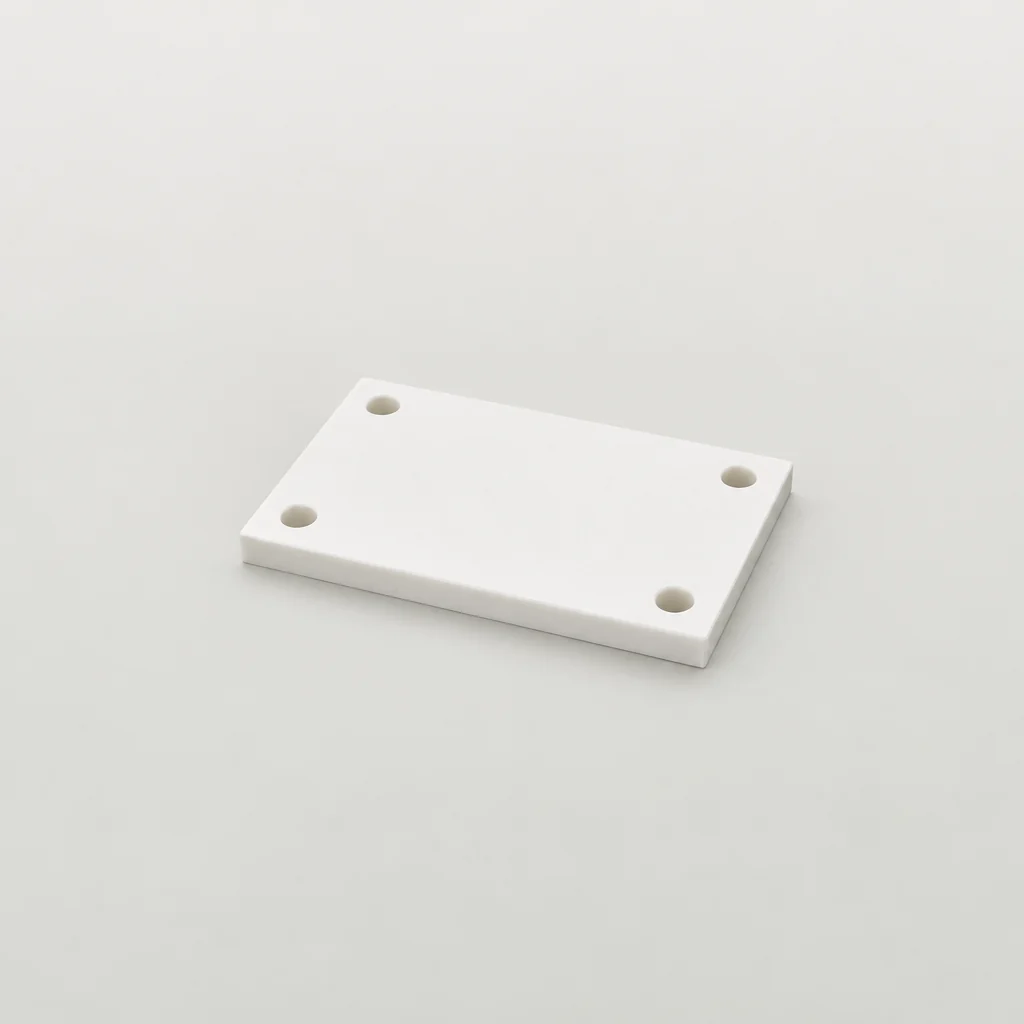
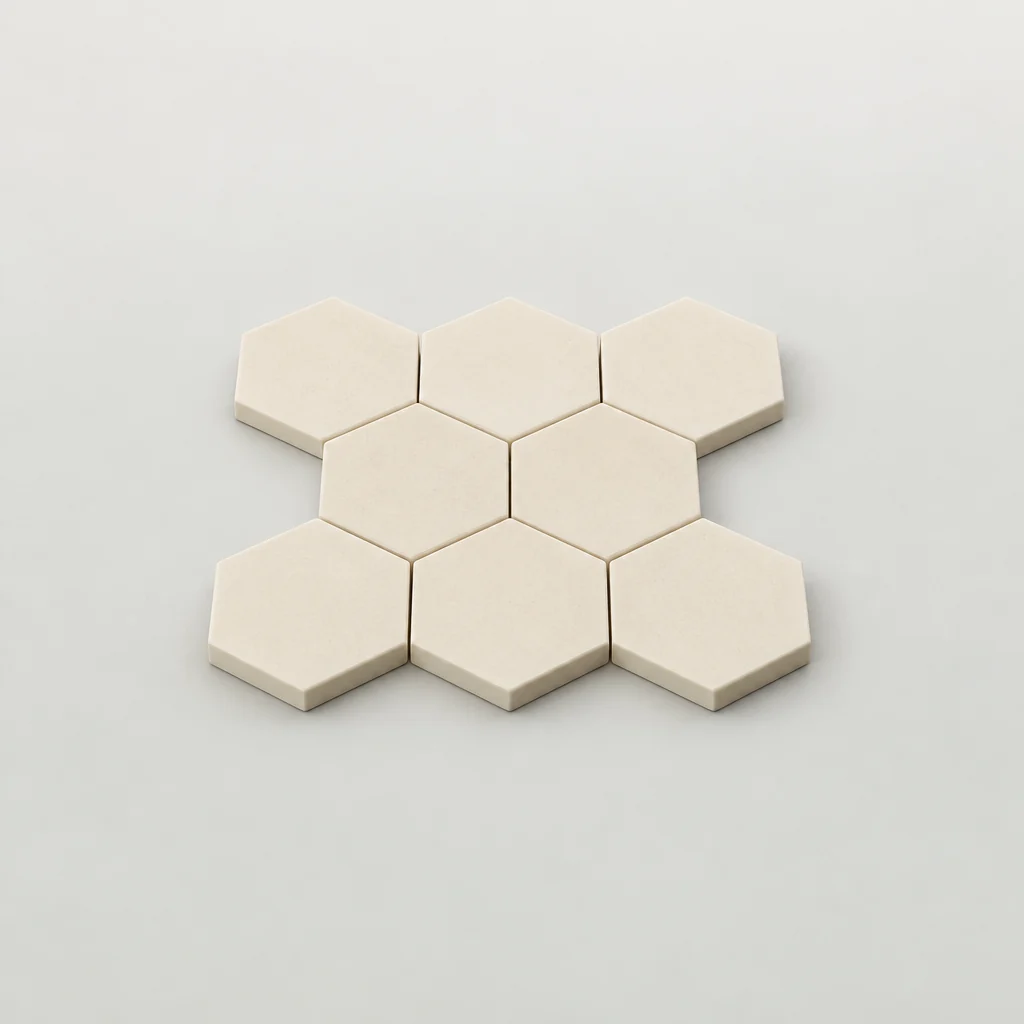
Ballistic tiles and hexagons are small ceramic parts that the armor manufacturer lays as a mosaic on panels and vehicles. They are chosen for their very high hardness; carbides, in addition, for their low density. We make them to drawing in boron carbide, silicon carbide and alumina: hexagons, square tiles and mosaics.
| Item | Ballistic tiles and hexagons |
|---|---|
| Lead time | Prototype: 2-4 weeks; series: 4-8 weeks |
| Minimum order | Depends on the part |
Why ceramics
In vehicle and panel armor, the ceramic face is usually not a single plate: it is assembled as a mosaic of small parts, hexagons or square tiles, on a backing. The armor manufacturer chooses the shape, the size and the material of each part.
The material is chosen for two properties at once: hardness and density. A vehicle or a panel carries many parts, so the density of the material weighs on the total. Boron carbide, silicon carbide and alumina are very hard, and the two carbides, in addition, have a low density. Compare the values of each material in the table.
We make the ceramic parts to drawing, with dimensional control so that they fit in the mosaic. The armor design, the ballistic testing and its certification are done by the customer who makes the system. This page does not state any protection level: that is set by testing the complete system.
Parts
Hexagonal parts that are laid side by side. Send us the drawing with the across-flats dimension and the thickness.
Square or rectangular tiles for mosaics and panels. Tell us the format and the quantity per panel.
Sets of parts designed to cover a specific surface. Send us the drawing of the assembly.
Materials
Each material has its own page with the hexagon data in that material.
| Material | Density | Hardness (HV10) | When it suits |
|---|---|---|---|
| Boron carbide hexagons | 2.5 g/cm³ | 3300 HV10 | When weight matters most; the hardest in the table |
| Silicon carbide hexagons | 3.1 g/cm³ | 2200-2800 HV10 | High hardness with low density |
| Alumina hexagons | 3.9 g/cm³ (99.7% alumina) | 1800 HV10 | The harder of the two aluminas |
| 96% alumina | 3.7 g/cm³ | 1150 HV10 | Good balance between cost and performance |
Typical values for guidance only. They are not a specification. Consult our technical team.
Manufacturing
| Material | Tightest tolerance | Minimum surface roughness (Ra) |
|---|---|---|
| Boron carbide | ±5 µm | 0.1 µm |
| Silicon carbide | ±2 µm | 0.1 µm |
| 99.7% alumina | ±2 µm | 0.1 µm |
Typical values for guidance only. They are not a specification. Consult our technical team.
Tiles and hexagons are made to drawing. The tolerance that can be achieved on your part depends on the dimension and the size. Also tell us how they are mounted: the fit between parts depends on the tolerance of each one.
Applications
They are used in defense and security.
How we work
You send us the drawing of the part or of the mosaic with the material you need.
We send you the quote with the recommended material. Response time: 24–48 h, working days.
We make a prototype so that you can test it inside your system.
We move to series with dimensional control and batch-to-batch repeatability.
Response time for a quote: 24–48 h, working days.
Case
Problem → material → result
We already work ballistic ceramics for real customers, with orders delivered. Their names and the details of their panels are not published. The design of the mosaic, testing and certification remain with the manufacturer of the system.
Questions
No. We make the ceramic parts to drawing. The ballistic testing and the certification of the protection system are done by the customer who makes the system.
The armor design decides, and it is done by the system manufacturer. We make both shapes to drawing.
Boron carbide. According to our datasheets, its density is 2.5 g/cm³, versus 3.1 g/cm³ for silicon carbide. It is also the harder of the two.
We make everything from short trial runs to long series, with dimensional control and batch-to-batch repeatability. Tell us how many parts you need and we will confirm it in the quote.
Indicative lead time: prototype in 2-4 weeks and series in 4-8 weeks, depending on workload and complexity. It depends on the material, the size and the quantity; we confirm it in the quote.
Products
Quote
Send us the drawing or a photo and tell us how the part works. We will tell you whether ceramics solve the problem and in which material.