Silicates and refractories are the technical ceramics Steelceram recommends for kilns, burners, heating elements and electrical insulators. The family has three materials: cordierite, mullite and steatite, each in several grades. They are chosen by temperature, by resistance to sudden temperature changes and by insulation. Compare their typical values.
Reviewed by Francisco GarcíaGeneral ManagerUpdated on
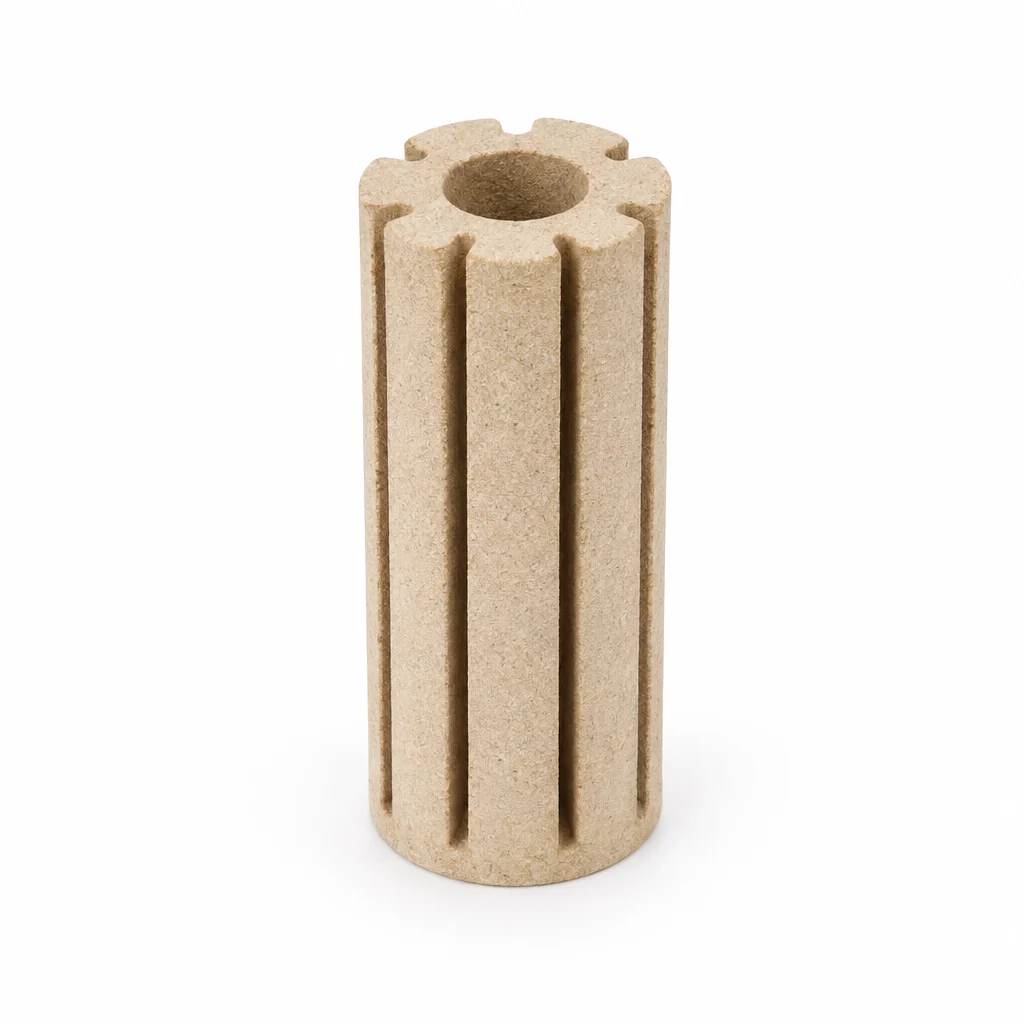
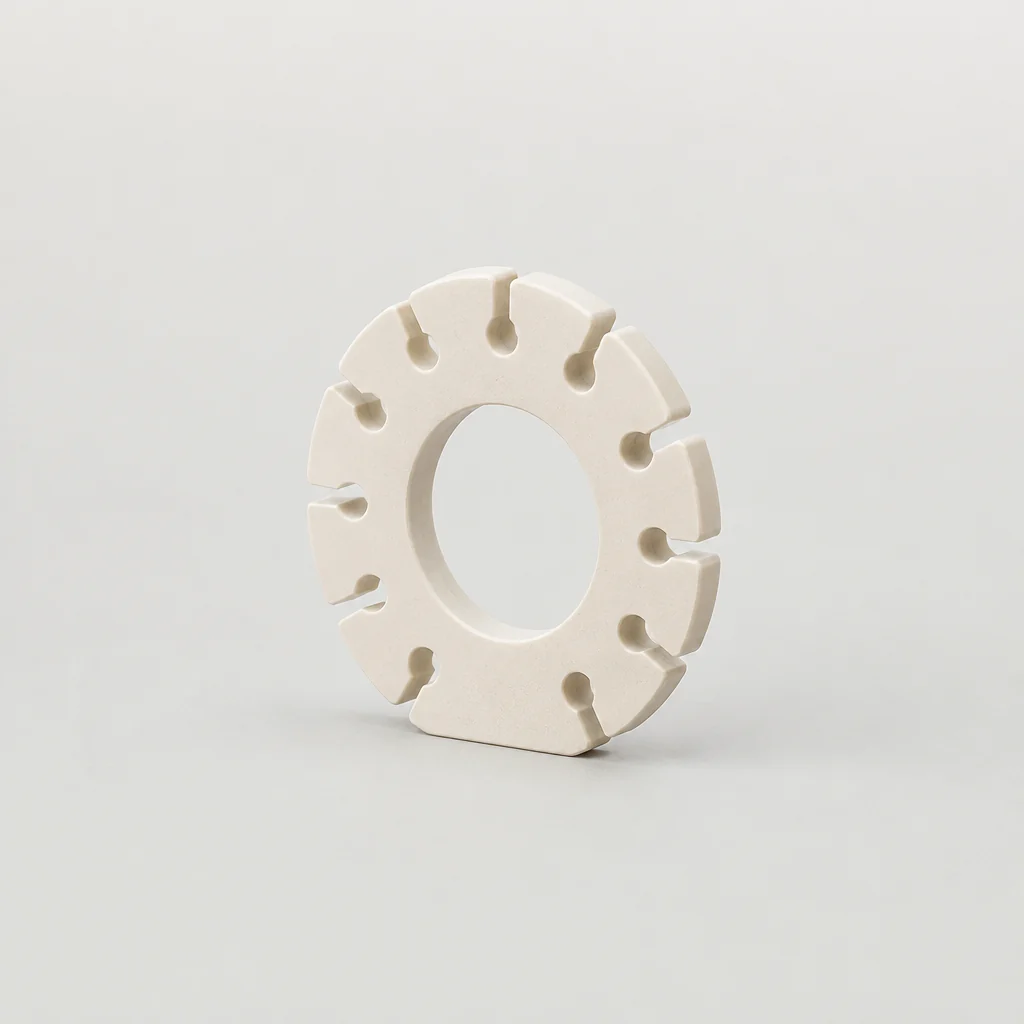
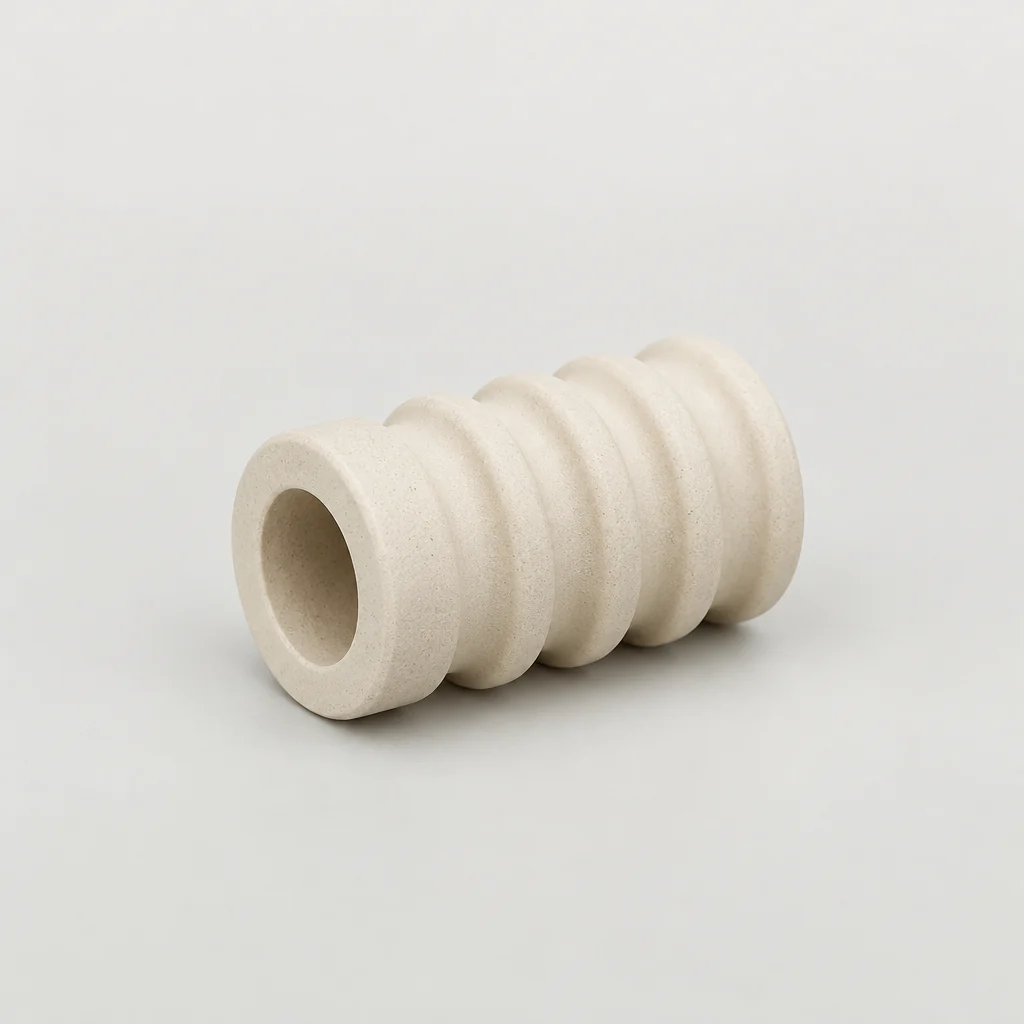
Material
These are ceramics designed for heat. Cordierite expands very little and so withstands sudden temperature changes. Mullite is stable at very high temperature and resists creep, that is, it does not deform over time under load and heat. Steatite is an electrical insulator that is easy to shape. Each material has several grades, and cordierite comes in dense and porous ones: compare them in the table.
Comparison
These are Steelceram typical values, with their unit: for guidance only, not a specification. For your case, consult our technical team.
| Grade | Density | Flexural strength | Thermal expansion (coefficient) | Thermal shock resistance (ΔT) | Maximum service temperature |
|---|---|---|---|---|---|
| Cordierite C 410 (dense) | 2.20 g/cm³ | 100 MPa | 3.0 10⁻⁶/K | 450 °C | 1200 °C |
| Cordierite C 520 (porous) | 2.00 g/cm³ | 45 MPa | 2.75 10⁻⁶/K | 700 °C | 1200 °C |
| Cordierite C 530 (porous) | 2.15 g/cm³ | 45 MPa | 4.5 10⁻⁶/K | 600 °C | 1250 °C |
| Cordierite-mullite | 2.35 g/cm³ | 70 MPa | 3.5 10⁻⁶/K | 550 °C | 1300 °C |
| Mullite C 610 | 2.65 g/cm³ | 140 MPa | 5.5 10⁻⁶/K | 200 °C | 1400 °C |
| Steatite C 221 | 2.75 g/cm³ | 120 MPa | 8.0 10⁻⁶/K | 120 °C | 1200 °C |
| Steatite C 230 | 2.10 g/cm³ | 65 MPa | 7.5 10⁻⁶/K | 150 °C | 1000 °C |
Typical values for guidance only. They are not a specification. Consult our technical team.
When to choose
This guide is for orientation only. Each part depends on its geometry and on how it works, so please confirm your choice with our technical team.
Parts
Cordierite kiln furniture.
Porous cordierite burner plates.
Mullite tubes for kilns.
Mullite thermocouple sheaths.
Steatite electrical insulators.
Questions
It depends on the temperature and on the temperature changes. Cordierite expands less than mullite C 610 and takes sudden changes better. Mullite withstands more temperature: its C 610 grade reaches 1400 °C, against 1200 °C for dense cordierite C 410.
The porous grade weighs less and, in cordierite, takes sudden temperature changes better: compare the thermal shock resistance of C 520, 700 °C, with that of C 410, 450 °C. The dense grade has higher flexural strength.
Steatite and cordierite. For mullite we do not claim it; if you need it, ask us. Outside this family, the aluminas also insulate.
It is a cordierite grade that combines cordierite and mullite. We present it on the cordierite page. Its typical values are in the table on this page.
Quote
Send us the drawing or a photo and tell us how the part works. We will tell you whether ceramics solve the problem and in which material.


